
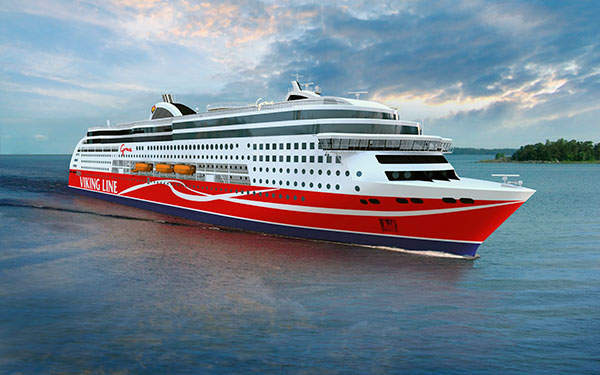
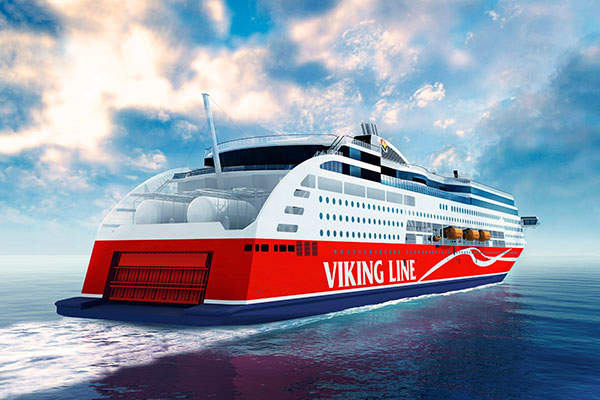
Viking Grace is a passenger and car ferry operating along the Turku – Aland Islands (Finland) – Stockholm (Sweden) route on the Baltic Sea.
She is considered to be the world’s most environmentally-friendly and most energy efficient passenger ship of her size. She has a gross registered tonnage of 57,000t.
Recommended White Papers
Recommended Buyers Guides

The ferry is owned and operated by Viking Line, a Finland-based ferry operator. STX Finland, which is a part of the international shipbuilding group STX Europe, constructed the vessel at an estimated cost of €240m ($320m).
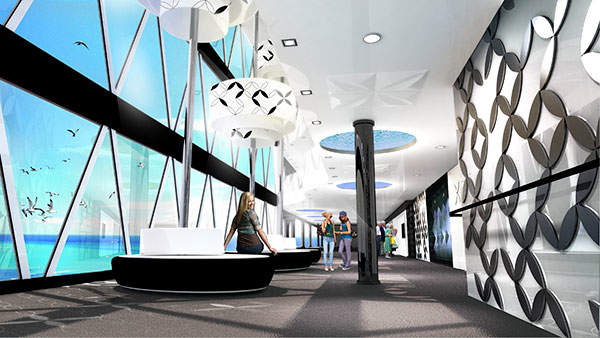
Finish interior architecture firm dSign Vertti Kivi & Co was responsible for designing and outfitting the vessel’s interior areas.
Propulsion machinery for the new ferry was supplied by Wärtsilä. Energy management systems were supplied by ABB.
Details of Viking Line and STX Finland’s agreement
Viking Line and STX Finland signed a letter of intent (LOI) for the construction of the new passenger ferry in October 2010. The deal was finalised two months later after receiving environmental clearance from the Finish Ministry of Transport and Communications.
The construction contract includes an agreement for the construction of another ship of similar type.
Construction of the new ship commenced in September 2011 at STX Europe’s shipyard in Turku, located in the region of Finland Proper.
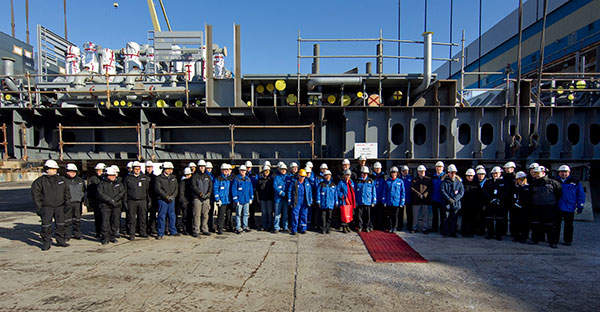
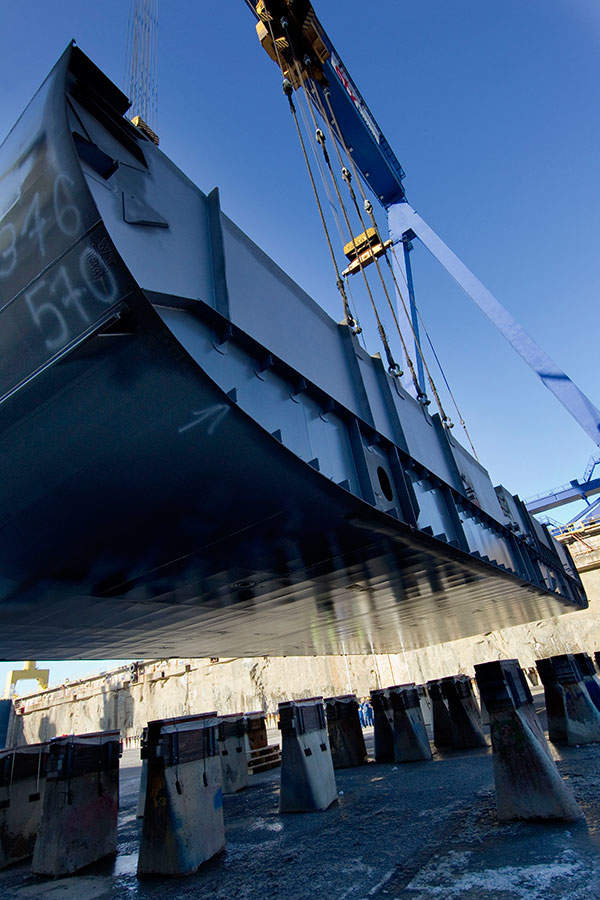
The keel laying ceremony was held at the shipyard in March 2012 and the ferry was delivered in January 2013. Approximately 14,000t of steel was used for the ship’s construction.
Custom design for the Viking Grace passenger ferry
Viking Grace has been especially designed to cruise in the tenuous and shallow waters of the Finnish and Swedish archipelago.
The ferry’s hull has been hydro-dynamically optimised to induce the lowest possible swells, which is very crucial when transiting through an archipelago.
The vessel is equipped with Wärtsilä’s dual-fuel technology. This allows her to sail on three alternative fuels: the traditional heavy fuel oil, diesel or liquefied natural gas (LNG), which is the most economical and environmentally fit fuel solution.
The dual-fuel engines operate and run on LNG. As a result, the emission of nitrogen oxide is 80% less than the IMO’s (International Maritime Organisation) existing specified level.
In addition, Viking Grace’s engine emits more than 90% less particulate matter than diesel engines.
Modern soundproofing technology is used to keep noise level at the lowest possible levels. Another innovative feature of the vessel is the use of light-emitting diode (LED) lights for entertainment aboard the vessel. These consume less electricity than the conventional halogen and arc lamps.
The length of the vessel’s cargo lanes is 1.275km, and half a kilometre is reserved for passenger cars on hoistable deck four. In addition, there is an extra space of half a kilometre on deck five, also for cars.
Cabin types aboard Viking Line’s Finnish ferry
Viking Line’s new build ferry has the capacity to accommodate 2,800 passengers in 880 cabins. All the passenger cabins are fitted out on decks five through nine and are installed with advanced TVs, radios and hair dryers.
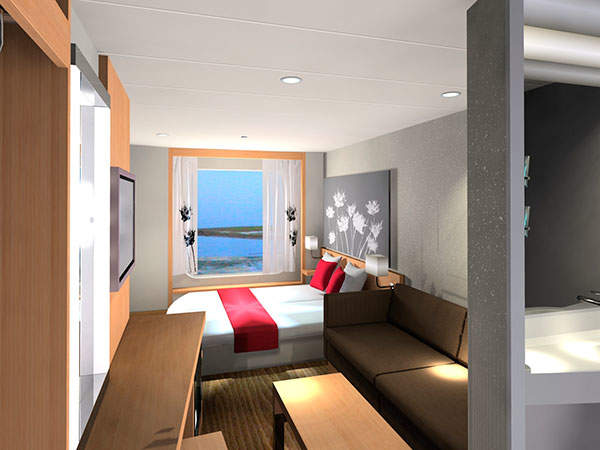
The number of cabins furnished with a double bed is more than 170. Passengers staying in seaside cabins can view the sea through large windows. Inside cabins are located on the other side of the corridor with outside cabins.
Premium cabins (total 48), located on decks seven, eight and nine, are provided with a double bed and a sofa which can be used as a bed.
Located on deck six, family cabins (inside and outside) offer accommodation for families with children.
Wärtsilä engines on the LNG-fuelled passenger vessel
Viking Grace is powered by four gas-fuelled Wärtsilä 8L50DF main engines. In order to achieve the highest propulsive efficiency and greater vibration control, the vessel is fitted with a pair of stainless steel fixed pitch propellers. Side thrusters include transverse bow and stern tunnel thrusters.