
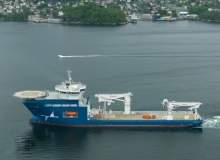

A new research project funded by the European Union (EU) has been launched to study the use of fibre reinforced polymer (FRP) composite materials in the process of shipbuilding.
The FIBRESHIP project aims to replace steel with FRP composite materials to facilitate the construction of lightweight and more efficient large-length ships.
Go deeper with GlobalData


Discover B2B Marketing That Performs
Combine business intelligence and editorial excellence to reach engaged professionals across 36 leading media platforms.
The research is expected to aid the creation of vessels featuring lengths of more than 50m for use in various applications such as commercial, passenger oceanographic and leisure transport.
Most vessels measuring less than 50m in length are manufactured with FRP materials, including pleasure boats, sailboats, ferries, patrol boats and rescue ships.
However, the use of such materials in vessels more than 50m-long is currently restricted to the secondary structures and components.
FIBRESHIP researchers seek to reduce the vessel weight by up to 30%, decrease the level of fuel consumption between 10%-15%, and increase the recycling ratio from the current 34% for steel structures to 75% by replacing steel with composite materials during shipbuilding.
The use of composite materials is also expected to reduce ships' greenhouse gas emissions and noise pollution, while increasing their cargo carrying capacity by around 12%.
The EU has provided a budget of €11m for the FIBRESHIP initiative, which includes €9m funding from the EU’s Horizon 2020 Programme.
Ireland’s University of Limerick’s (UL) lead principal investigator Dr Anthony Comer, and UL co-investigator and project manager Dr Ioannis Manolakis are involved as experts in the composites element of the FIBRESHIP project.
Dr Comer said: “Europe’s leadership position in the world shipbuilding industry in value terms is based on its commitment to research, technology innovation and the delivery of high value-added products.
“In fact, Europe continues to classify the largest proportion of all newly constructed civilian and merchant ships in the world.
“FIBRESHIP stands out as the first initiative to comprehensively introduce FRP in the construction of larger vessels.”
A total of 18 entities from the European shipping and shipbuilding industry, from 11 different countries, have agreed to take part in the FIBRESHIP initiative.
Image: A Hapag-Lloyd ship. Photo: courtesy of Hapag-Lloyd / University of Limerick.


