
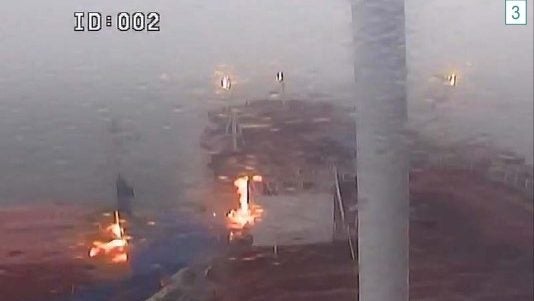
The UK Government’s Marine Accident Investigation Bureau (MAIB) has published its interim report into the North Sea collision between the container ship Solong and the at-anchor tanker Stena Immaculate, highlighting the meteorological and on-board conditions at the time of the event that killed one seafarer.
Able seaman Mark Pernia is still missing and presumed dead after the 10 March incident.
Go deeper with GlobalData


Discover B2B Marketing That Performs
Combine business intelligence and editorial excellence to reach engaged professionals across 36 leading media platforms.
The initial document from MAIB concentrated on the routes and positions of the vessels in the hours prior to the collision, the cargos onboard, and the actions of the vessel masters and crew.
The captain of the Solong, which was travelling from Grangemouth in Scotland to Rotterdam in the Netherlands, took up watch on the bridge at 0700 on the morning of the collision.
The Stena Immaculate‘s Second Officer had commenced anchor watch just prior to midnight on 9 March, and was still on duty at 0947 when the collision occurred.
“The visibility in the area north of the Humber light float was reported to be patchy and varying between 0.25 nautical miles (nm) and 2.0nm,” at the time, the MAIB noted.
Crucially, it also found that “neither Solong nor Stena Immaculate had a dedicated lookout on the bridge.”
Crowley Government Services, the operator of the Stena Immaculate, pointed out that its crew had obeyed all relevant maritime laws governing watch while at anchor.
“It is important to note that watch requirements for vessels at anchor are different from ships that are underway. The Stena Immaculate was operating in compliance with applicable watch-standing safety regulations and Crowley company policies for an anchored vessel. We are confident that the forthcoming comprehensive investigation report will clarify the facts and circumstances of the incident, demonstrating that Crowley exercised appropriate vigilance,” the company told Ship Technology.
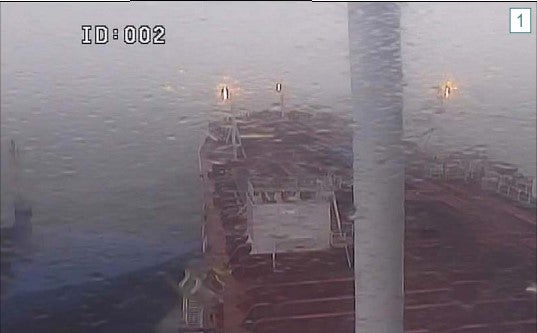
When the Solong‘s bow collided with the midsection of the Immaculate, the result was almost instantaneous, as it penetrated the “no.7 port cargo tank, releasing aviation fuel into the sea and onto the bow of Solong. The aviation fuel was ignited by the heat generated by the force of the collision,” MAIB explained.
It is understood that able seaman Pernia was in the forecastle structure on the Immaculate (the white structure seen in the image above) when the collision occurred. The crew did attempt to locate the missing seafarer, but were forced to abandon ship and give up their efforts due to the severity of the ensuing fire.
The MAIB investigation and the salvage operations on both vessels are continuing.
This story has been updated to include comment from Crowley Government Services, which was sent after the story was initially published.


