
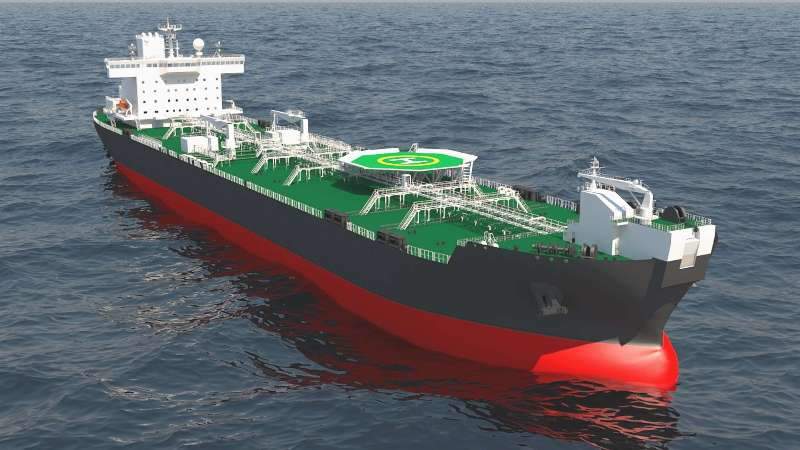
China-based Dalian Shipbuilding Industry (DSIC) has secured an approval-in-principle (AiP) certificate from Norwegian classification society DNV GL for a new shuttle tanker design.
Before awarding the AiP, DNV GL participated in a two-day shuttle tanker workshop held at DSIC.

Discover B2B Marketing That Performs
Combine business intelligence and editorial excellence to reach engaged professionals across 36 leading media platforms.
The shuttles will be operated in the North Sea and the Norwegian Continent Shelf. The design complies with the International Maritime Organisation’s (IMO) Energy Efficiency Design Index (EEDI) Phase 3 regulations.
DNV GL shuttle tankers expert Olav Tveit said: “DNV GL class has the biggest share of the global shuttle tanker market, in particular for those operating in the North Atlantic.”
DNV GL has also awarded a separate AiP to DSIC for a column-stabilised crane unit design.
Called DSCU12000, the design features a dynamic positioning system and two rotary heavy-lift cranes and S-Lay pipe laying system.
The crane design is developed on the basis of DNV GL’s +1A Column-stabilised Crane Unit DYNPOS-AUTRO Crane-offshore class notation. It also meets the latest DNV GL offshore standards and IMO’s Mobile offshore drilling units (MODU) code.


