

The International Maritime Organisation (IMO) has completed the execution of the GloBallast project, which assists developing countries in reducing the transfer of harmful aquatic organisms and pathogens in ships' ballast water, as well as implementing the IMO Ballast Water Management (BWM) Convention.
The partnerships programme was executed in collaboration with Global Environment Facility (GEF) and United Nations Development Programme (UNDP). It was first launched in 2007.

Discover B2B Marketing That Performs
Combine business intelligence and editorial excellence to reach engaged professionals across 36 leading media platforms.
GloBallast developed a model of working with lead partnering countries, as well as the shipping industry and academia, to catalyse knowledge-sharing, training and capacity-building in the fields of implementation of BWM Convention and related issues.
Regional task forces were also established in 12 developing sub-regions, and location-specific strategies and action plans on ballast water management were developed, involving more than 100 countries.
Six of these action plans have been adopted through the regional cooperating institutions so far.
Additionally, the GloBallast project has helped in the development of a public-private sector partnership involving the Global Industry Alliance for Marine Biosecurity (GIA), which consists of shipping companies such as Keppel Offshore and Marine (KOM) and APL.
The GIA supported the formation of Global Ballast Water Test Organisations Network (GloBal TestNet), which aims to increase levels of standardisation, transparency and openness in relation to these areas.
The network includes 19 organisations that test ballast water treatment systems.
IMO marine environment division director Dr Stefan Micallef said: “Through GloBallast, Governments, industry and other stakeholders have acted to further improve the environmental and socio-economic sustainability of shipping and worked to reduce its negative impact on marine ecosystems.
“I have every hope that the ‘GloBallast family’ will continue its championing efforts and collaboration to protect our oceans, in the spirit of the United Nations Sustainable Development Goal 14.”
IMO’s BWM Convention is currently scheduled to enter into force by September.
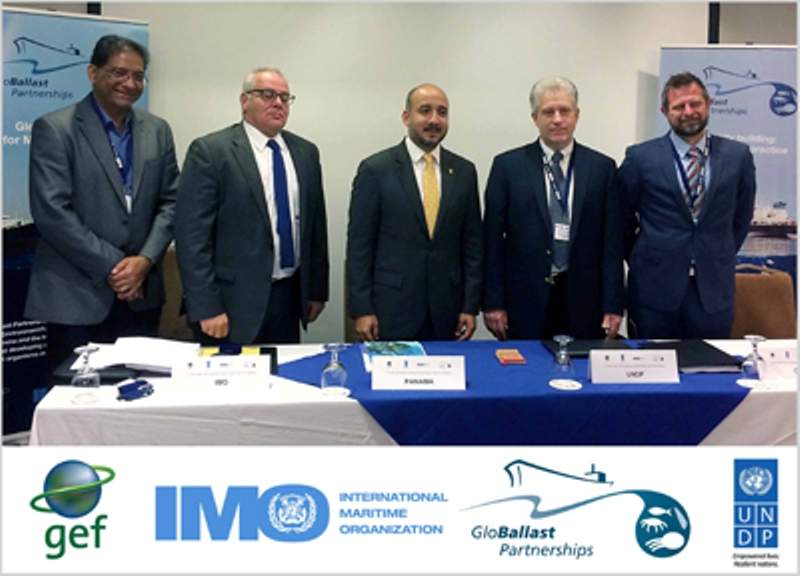
Image: Final meeting of GloBallast Global Project Task Force (GPTF) held in Panama City, Panama. Photo: courtesy of International Maritime Organization (IMO).


