
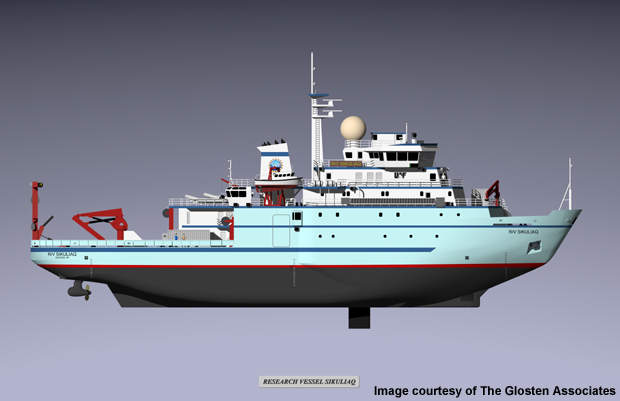
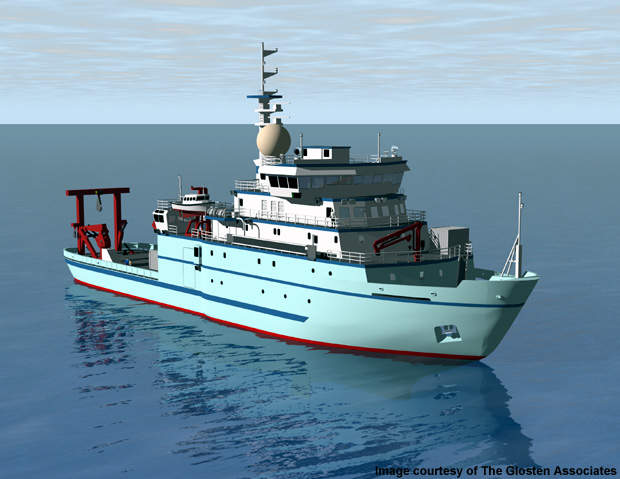
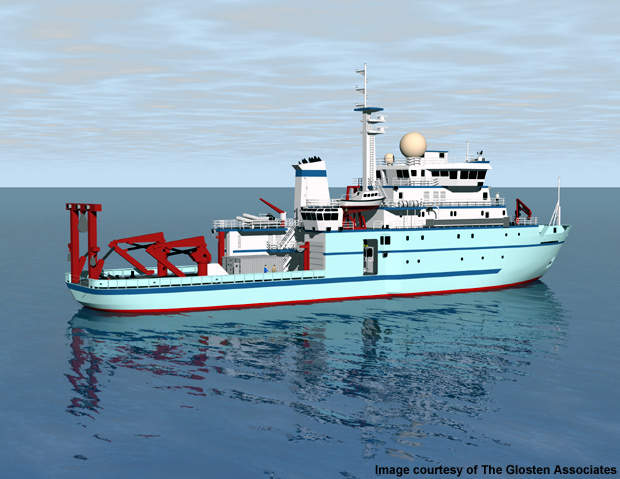
The Sikuliaq is a research vessel was built by Fincantieri for the US’s National Science Foundation (NSF), and is one of the most sophisticated university research vessels in the world. Its home port is at the UAF Seward Marine Center in Seward, Alaska, where the vessel is used by US scientists and the international oceanographic community.
Fincantieri built the vessel at its Marinette Marine shipyard in Wisconsin, costing $120m. The design of the ship was completed in 2004. Its construction began in April 2011 and it was launched in October 2012. NSF took delivery of the vessel in June 2014.
Recommended White Papers

Recommended Buyers Guides

The research vessel can break ice up to 80cm thick and can work in the Arctic, the Bering Strait and the Gulf of Alaska. It is used for oceanographic research for a minimum of 30 years.
Specially designed to study sensory systems and climate change in the Arctic region, the ship is also used to examine the marine ecosystem.
The Sikuliaq replaced the 1966-built and now retired R/V Alpha Helix research vessel. Owned by the NSF, the Helix was sold to Stabbert Maritime in August 2007.
Sikuliaq facilities
The vessel accommodates 26 scientists and students. Annually, 500 researchers and students can also accommodate for 300 days at sea. The ship is equipped with technology that allows researchers to share information with research facilities across the globe in real-time.
Scientific instruments and remote-controlled vehicles installed on the ship are operated by a group of winches. The winches move the instruments above and below the waterline to collect sediment samples from the sea floor.
The vessel is equipped with modern satellite communications to connect to students in classrooms, and furnished with a dynamic positioning function, precision vessel motion detectors and an advanced vessel control system.
The researchers are accommodated in double-occupancy staterooms, which are connected with phones for internal communication. The vessel is furnished with a science library / lounge, a conference room and an exercise room.
Ship design
The hull of the ship is designed to move smoothly in Arctic sea ice and Alaskan waters. The sides of the hull are joined by reamers to cut down the ice pressures during sailing. Hull friction is reduced by swamping the area of contact between the hull and ice. The bow is protected from riding up on the stronger ice by placing an ice wedge beneath it. The ice wedge is fitted with bow thrusters.
Propulsion
The vessel is fitted with diesel-electric and steerable propulsion stern thrusters. The propulsion system comprises ship service diesel generators and power transition instruments. A pulse-width modulation frequency converter is used to run two 2,238kW, 900RPM, 690V, 60Hz main propulsion motors.
A Tees White Gill type T3-QR 40 bow thruster is installed and assembled with a minimum 3RPM, 360° azimuthal steering control. The motor runs on pulse-width modulating frequency converter supply.
The fuel and ballast capacities are 148,000gal and 200,000gal, respectively. The engine generates 5,750BHP. The ship uses two Z-drive propulsion units.
Key players
The vessel is operated by the University of Fairbanks. The ship was designed by The Glosten Associates, a Seattle-based naval architects firm.
The project was financed by the American Recovery and Reinvestment Act of 2009.