
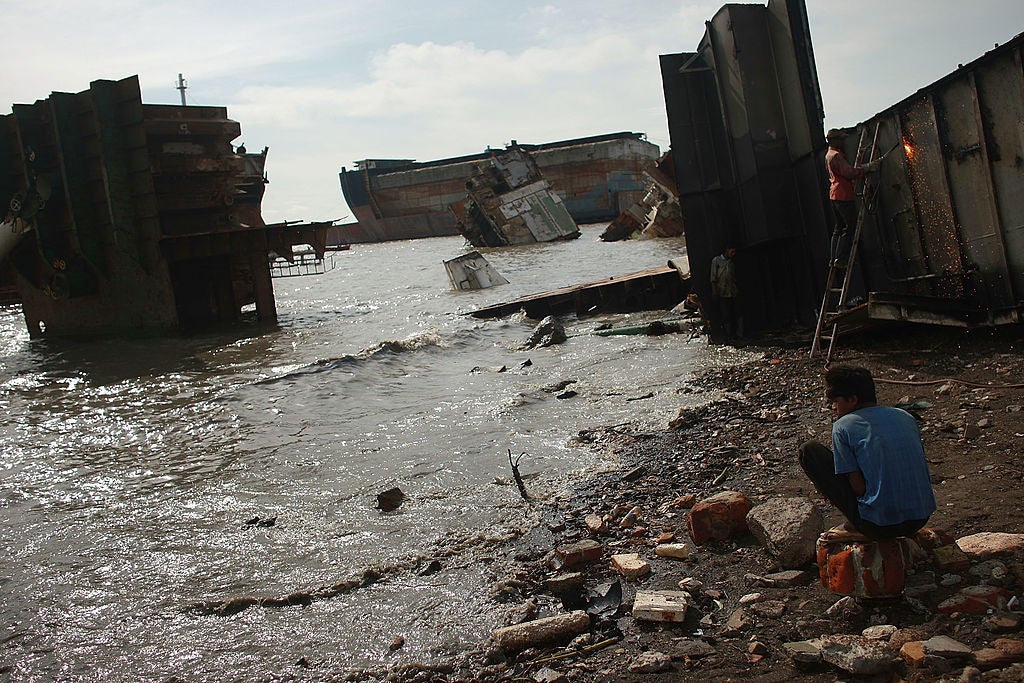
More than 21 European companies are allegedly abandoning end-of-life ships on Bangladesh’s shores, endangering the surrounding environment and lives of shipbreaking workers, according to a report by Human Rights Watch (HRW) and NGO Shipbreaking Platform.
Dumping toxic waste directly onto beaches and denying workers proper wages is commonplace in Bangladeshi shipbreaking yards.
Go deeper with GlobalData


Discover B2B Marketing That Performs
Combine business intelligence and editorial excellence to reach engaged professionals across 36 leading media platforms.
European shipping companies have “knowingly” exploited these malpractices to widen profit margins, the report accused.
The accusations come amid a heightened focus on Bangladesh within the European transport industry. European transport company filings mention Bangladesh more frequently than any other country, research by GlobalData shows.
Toxic ship beaching on Bangladeshi shores
Bangladesh is home to more shipbreaking activity than any other country. Since 2020, approximately 20,000 Bangladeshi workers have torn apart at least 520 obsolete ships – often without protective gear.
In 2021, 254 ships were dismantled in Bangladesh, according to the NGO Shipbreaking Platform.
This predominantly involved ‘beaching’ on the south-eastern Sitakundu coastline by the city of Chattogram [formerly known as Chittagong]. Ships sail at full steam onto the beach during high tide to be torn apart on the sand where they come to rest, instead of using a dock or contained platform.
Shipbreaking is already “one of the world’s most dangerous jobs”. HRW said beaching makes it inherently more hazardous as workers handle toxic materials from the vessels, including asbestos, without protective equipment.
A 2019 survey revealed 13% of the Bangladeshi shipbreaking workforce were children, rising to 20% during illegal night shifts. Many workers began working in shipbreaking yards from the age of 13.
“Companies scrapping ships in Bangladesh’s dangerous and polluting yards are making a profit at the expense of Bangladeshi lives and the environment,” said Julia Bleckner, senior Asia researcher at Human Rights Watch. “Shipping companies should stop using loopholes in international regulations and take responsibility for safely and responsibly managing their waste.”
Human Rights Watch says it wrote to 21 companies, the International Maritime Organization (IMO) and four Bangladeshi government agencies asking for a response to the report.
Our signals coverage is powered by GlobalData’s Thematic Engine, which tags millions of data items across six alternative datasets — patents, jobs, deals, company filings, social media mentions and news — to themes, sectors and companies. These signals enhance our predictive capabilities, helping us to identify the most disruptive threats across each of the sectors we cover and the companies best placed to succeed.


