
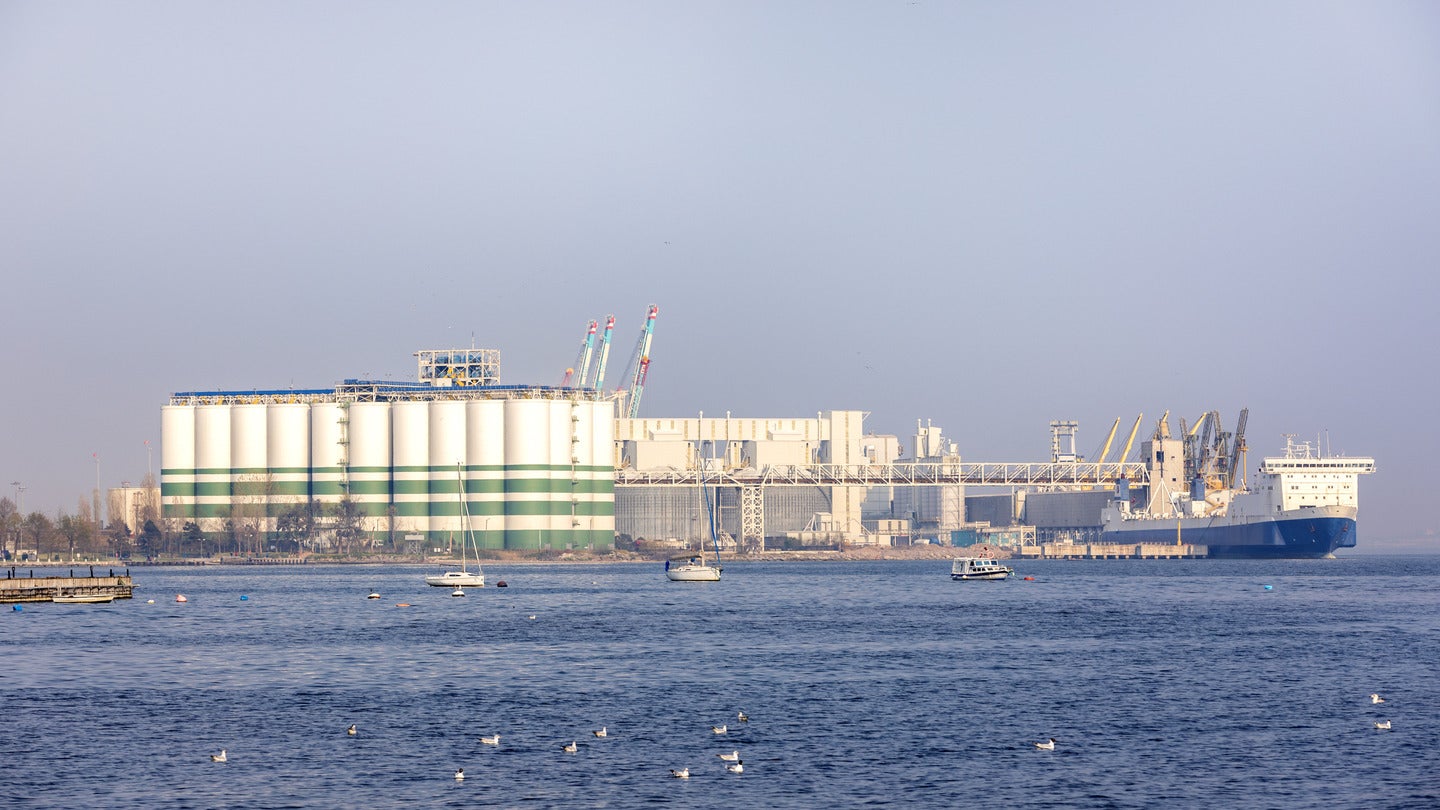
On Monday 7 August, an explosion at the western Turkish port of Derince damaged silos containing up to eight million tons of grain, causing further disruption to European food supply chains amid a plateau in transport and logistics jobs in Turkey.
An ongoing investigation indicated the explosion – which injured 12 people, three of whom are in serious condition – was likely caused by wheat dust compression as the wheat was transferred from ship to silo. Seddar Yavuz, governor of the Kocaeli province, said local authorities “are investigating every possible reason” for the explosion.

Discover B2B Marketing That Performs
Combine business intelligence and editorial excellence to reach engaged professionals across 36 leading media platforms.
Grain supply chain concerns
Regardless of the cause of the Derince explosion, pressure on the Turkish grain supply has intensified by a plateau in related job hirings. Research by GlobalData showed transport and logistics jobs have decreased by nearly 27% since January 2023.
The nationwide transportation staff shortages impede the overall volume of key agricultural supplies, which can be processed through Turkish ports.
This is of particular concern given the droughts in central Turkey this year, which have hampered crop yield, and the country’s reliance on maritime shipping for exports: container port traffic increased by 8.6% in 2021, according to GlobalData’s Turkey Macroeconomic Country Outlook Report.
Derince is not Turkey’s largest port, but its location (less than 50 miles from Istanbul) allows access to the Sea of Marmara, the Black Sea, the Aegean Sea, the Mediterranean and the Atlantic Ocean. It recently accounted for an annual ship capacity of 862 tonnes.
Turkish officials reported that 13 silos and surrounding buildings were heavily damaged before firefighters and police were able to extinguish the blast. The Ministry of Transportation said no ships were damaged by the explosion.
Moscow’s hand in grain shipping instability
There has been unsubstantiated speculation around Russian involvement, largely due to Moscow’s recent attacks on Ukrainian grain warehouses by the Black Sea and Danube River since President Putin withdrew from the Black Sea Grain Initiative on July 18.
While consistent with Russia’s strategy of destabilising grain supply chains across Ukraine and wider Europe, a direct attack on Turkish soil seems unlikely. True, Ankara spends $386m on wheat imports from Ukraine – but it also imports $1.79bn worth of wheat from Russia.
Despite Nato membership, Turkey has remained relatively neutral throughout the Russia-Ukraine conflict, with President Erdoğan refusing to apply Western-led sanctions on Moscow.
Erdoğan has cast himself as peacemaker, brokering the Black Sea Grain Initiative in 2022 which allowed the safe maritime export of grains from key Ukrainian ports.
Our signals coverage is powered by GlobalData’s Disruptor data, which tracks all major deals, patents, company filings, hiring patterns and social media buzz across our sectors. These signals help us to uncover key innovation areas in the sector and the themes that drive them. They tell us about the topics on the minds of business leaders and investors, and indicate where leading companies are focusing their investment, deal-making and R&D efforts.

