
In this interview, Bahri Chemicals President Faisal Al-Husseini details how the company is advancing the maritime industry’s next wave—following Bahri’s win of the Innovation Award for Advanced Immersive Maritime Training in the 2025 Ship Technology Excellence Awards.
The company is deploying a 3D digital twin for immersive training, scaling cloud-enabled modular systems, and leveraging data-driven operations to boost safety, efficiency, and ESG performance while collaborating to raise global standards.
Go deeper with GlobalData


Discover B2B Marketing That Performs
Combine business intelligence and editorial excellence to reach engaged professionals across 36 leading media platforms.
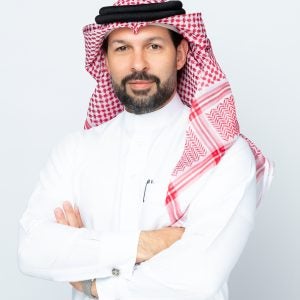
Ship Technology (ST): Congratulations on winning the Innovation Award for Advanced Immersive Maritime Training. How does this recognition reflect Bahri’s broader vision for the maritime industry?
Faisal Al-Husseini: Thank you, we’re very proud to receive this recognition that I see as a testament to Bahri’s aspiration towards advancing the future of maritime operations and training. Our vision is to create value and share prosperity by connecting economies through excellence in global shipping and logistics solutions. Bahri believes that our vessels and in-house technical management are the backbone of our business, while our people are its core. Unfortunately, many shore-based personnel have never had an opportunity to visit an actual vessel, so we set about bridging that gap. Anyone working in our industry should see a vessel in order to deepen their understanding of our industry and gain a healthy appreciation for our seafarers.
The 3D digital twin project for our chemical tanker Fatimah demonstrates how we are translating that mission into a reality that is engaging, inspiring, and ultra-realistic. Through harnessing the power of gamification and Unreal Engine, we’ve created a powerful learning environment where training is achieved through user experience and interactions rather than from reading a textbook. It is plain to see that the future of training in the maritime industry will become immersive in nature, and we are proud to be at the forefront of that.
ST: How does Bahri’s vision influence its leadership approach and drive innovation across the organization?
Faisal Al-Husseini: At Bahri, our leadership approach is centered around empowerment, collaboration, and a clear mandate for driving innovation. Ideas are shared during Management Committee meetings as a sounding board to recommend improvements and weigh the merits. We also encourage our teams to challenge the status quo and experiment with new technologies and solutions, while ensuring that every initiative aligns with our vision and strategic goals. Innovation is embedded into our governance and decision-making processes, which allows us to incubate promising ideas — such as the 3D digital twin — from concept to deployment.
ST: What steps does Bahri take to foster a culture of innovation across its business units?
Faisal Al-Husseini: That’s a great question because innovation is both a culture and a disciplined process to create stakeholder value and enhance competitiveness. Like riding a bike, to keep innovating you need to keep moving. We take a structured approach to innovation. This starts with asking ourselves “what problem are we solving for?” and “can we measure it?” The process includes setting clear innovation targets over the next 1-3 years, running internal ideation challenges, and investing in training that builds digital skills across all levels of the organization. Importantly, we create cross-functional innovation teams that bring together expertise from technical ship management, Digital team, and commercial divisions to co-create solutions. This culture has been key to scaling initiatives such as our digital twin project.
ST: Can you share examples of how digital transformation is being implemented throughout the group’s operations?
Faisal Al-Husseini: Beyond the Fatimah digital twin, Bahri has implemented advanced analytics for predictive maintenance, optimization of fuel consumption, and Robotic Process Automation for filing documents and submitting them. Our training programs now include immersive simulations that replicate real-world scenarios, enabling our crew to train safely and cost-effectively while reducing downtime.
ST: In what ways is Bahri contributing to the advancement of global maritime standards and best practices?
Faisal Al-Husseini: Bahri actively participates in IMO working groups and industry forums to help shape future regulations, particularly in the areas of digitalization, decarbonization, and crew safety. We also share best practices from our digital twin and immersive training initiatives with peers and partners, contributing to a collective push toward higher global standards.
ST: How does Bahri collaborate with international partners, regulatory bodies, and technology providers to drive industry-wide progress?
Faisal Al-Husseini: Collaboration is crucial for scalable impact that elevates the shipping industry as a whole and is a component of our vision. “A rising tide floats all ships,” and we routinely work with the Saudi Ministry of Transportation and Saudi Ports Authority to enhance engagement and maritime knowledge. For the digital twin project, we partnered with master mariners, leading technology providers and training experts to ensure authenticity and effectiveness. We also work closely with regulators to align our solutions with evolving safety and environmental standards, creating models that can be replicated industry-wide.
ST: In your view, how will immersive training technologies shape the future of maritime workforce development?
Faisal Al-Husseini: Immersive training technologies will disrupt maritime training and education through gamification and immersive experiences. They allow for experiential learning in a risk-free environment, drastically reducing training time and improving knowledge retention. I believe these tools will become the global standard, helping to address skills shortages and ensuring a safer, more capable maritime workforce.
ST: What are some of the key challenges Bahri faces in implementing new technologies and digital solutions, and how is the group addressing them?
Faisal Al-Husseini: One challenge is change management — ensuring our teams embrace new tools and workflows and then anchor them into our DNA by embedding them into processes and procedures. We addressed this by involving end-users early in development and seeking their feedback. The project is a living system that is evolving and growing to meet requirements; therefore, continuous feedback is essential. In the process, they became part of the success and net promoters of the project. Cybersecurity and data governance are also critical considerations, which we manage through strict compliance with global standards.
ST: How does Bahri ensure its solutions remain adaptable to the rapidly evolving needs of the maritime sector?
Faisal Al-Husseini: Flexibility is built into our digital strategy. Our systems are cloud-enabled, modular, and designed for scalability, allowing us to quickly integrate new features or technologies. We continuously review performance metrics and gather user feedback to refine and improve solutions over time.
ST: How does Bahri leverage technology and data to improve efficiency and risk management across its fleet and services?
Faisal Al-Husseini: We use real-time data from IoT sensors and predictive analytics to monitor vessels, optimize routes, and manage risk proactively. This enables us to minimize fuel consumption, reduce emissions, and prevent incidents — creating a safer and more sustainable fleet.
ST: What trends are you seeing in customer expectations regarding maritime training and safety?
Faisal Al-Husseini: Customers are placing greater emphasis on transparency, safety performance, and ESG compliance. They expect their partners to invest in next-generation solutions that ensure reliable, safe, and environmentally responsible operations. Our digital twin and immersive training initiatives directly address these expectations.
ST: How does Bahri gather and respond to customer feedback to enhance its value proposition?
Faisal Al-Husseini: We maintain a close dialogue with customers through joint workshops, surveys, and regular performance reviews. Insights gathered are fed into our innovation roadmap, ensuring that our solutions address real-world needs and create measurable value for our stakeholders.
ST: What sustainability initiatives are in place at Bahri to address environmental challenges in shipping and logistics?
Faisal Al-Husseini: Bahri is investing in energy-efficient technologies, adopting alternative fuels, where feasible, and implementing advanced emission-reduction measures. We are also aligning with IMO’s decarbonization targets and ESG frameworks to ensure our operations contribute positively to global climate goals.
ST: How does the group ensure the safety and well-being of its workforce across all divisions?
Faisal Al-Husseini: Safety is a core value at Bahri. We conduct regular safety drills, mental health programs, and wellness initiatives. Our digital twin technology also supports safety by enabling scenario-based training that prepares crews for critical situations without exposure to real-world risk.
ST: What are your aspirations for the next phase of Bahri’s growth and innovation?
Faisal Al-Husseini: We aim to expand our digital twin program across more vessels, scale AI-driven solutions to enhance efficiency, and lead the industry in sustainable shipping practices. Our focus is to create value not just for Bahri but for the entire maritime ecosystem.
ST: How do you see the company’s role in shaping the future of the global maritime industry?
Faisal Al-Husseini: Bahri is well-positioned to be a catalyst for change — advancing digital transformation, sustainability, and safety standards. We see ourselves as both a leader and a collaborator, working to accelerate the industry’s transition to a smarter, greener future.
ST: What advice would you offer to other maritime leaders seeking to navigate the evolving landscape of the shipping industry?
Faisal Al-Husseini: My advice is to embrace innovation fearlessly but thoughtfully. Build strong partnerships, invest in your people, and focus on scalable solutions that create lasting impact. The industry is changing rapidly — those who adapt and lead will shape its future.



