
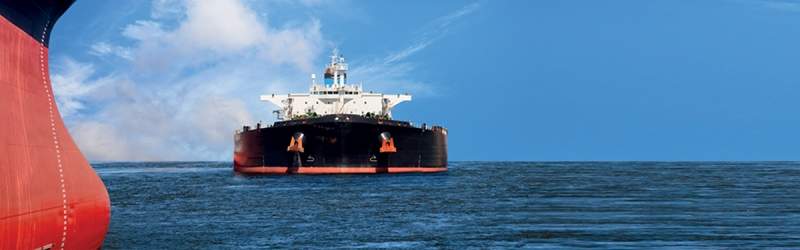
The International Maritime Organization (IMO) has adopted an initial strategy to reduce at least 50% greenhouse gas (GHG) emissions from the global shipping sector by 2050, compared to 2008.
Adopted by IMO’s Marine Environment Protection Committee (MEPC), the strategy has set out the future vision for international shipping, the levels of ambition to reduce GHG emissions, and guiding principles.
Go deeper with GlobalData


Discover B2B Marketing That Performs
Combine business intelligence and editorial excellence to reach engaged professionals across 36 leading media platforms.
The strategy also includes short, mid and long-term measures with possible timelines and their impacts on the Member States.
It aims to strengthen the energy efficiency design requirements for each ship type and reduce up to 40% emission by 2030. The strategy will pursue efforts to reduce 70% emission by 2050, compared to 2008, and subsequently move towards a complete phase-out.
It also features a specific reference to ‘a pathway of CO2 emissions reduction consistent with the Paris Agreement temperature goals.’
Speaking at the 72nd session of MEPC, where the initial strategy was adopted, IMO Secretary-General Kitack Lim said: “I encourage you to continue your work through the newly adopted Initial GHG Strategy, which is designed as a platform for future actions.”
As per the ‘Roadmap’ approved by IMO Member States in 2016, the newly adopted strategy is expected to be revised by 2023.
Welcoming the agreement, the UK Chamber of Shipping CEO Guy Platten said: “The shipping industry has already made great strides. Battery-powered ferries operate in Scotland, Scandinavia, and elsewhere.
“Huge investment has gone into better hydrodynamics, more efficient engines and lower carbon fuels. But make no mistake, these marginal gains alone are not enough to meet the 50% target, and certainly will not be enough meet the public’s expectations of a more fully decarbonised industry.”
The organisation has also urged the UK to focus on developing carbon-free fuels and other research and development (R&D) efforts for ships.
The initial GHG strategy was adopted by IMO’s Marine Environment Protection Committee (MEPC), during its 72nd session at IMO Headquarters in London, UK.



