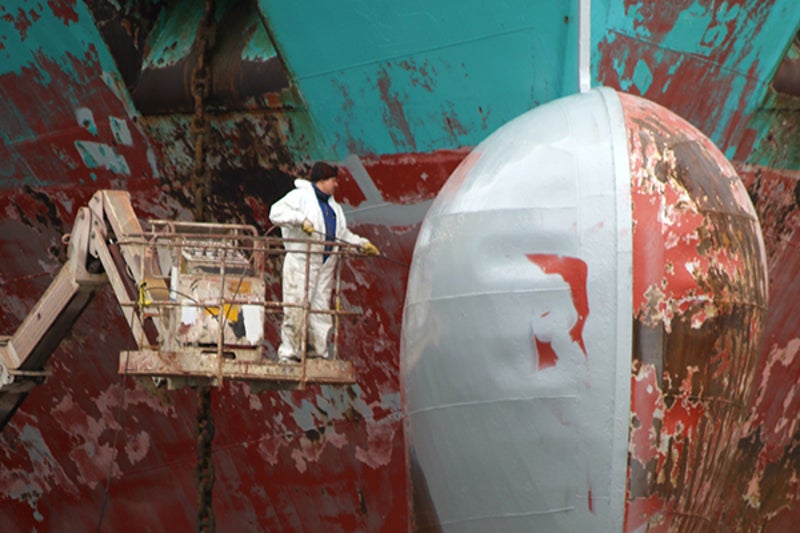
The International Maritime Organization (IMO) has launched a new global project in collaboration with the Global Environment Facility (GEF) and the United Nations Development Programme (UNDP) to address bioinvasions through ships’ hulls and other marine structures.
Aimed at fighting the negative environmental impacts of the transfer of aquatic species through ships, the GloFouling Partnerships project will drive actions to implement the IMO Guidelines to control and manage ships’ biofouling.
Go deeper with GlobalData

Discover B2B Marketing That Performs
Combine business intelligence and editorial excellence to reach engaged professionals across 36 leading media platforms.
IMO Marine Environment Division director Hiroyuki Yamada said: “This joint effort to implement the IMO Biofouling Guidelines and best practices for other marine industries will help nations to deliver essential contributions to the 2030 Agenda for Sustainable Development Goals.”
Guidelines provide a globally consistent approach on the way biofouling should be controlled and managed to reduce the transfer of invasive aquatic species through ships’ hulls.
Twelve countries that represent a mix of developing nation and Small Island Developing States will lead the project work. Countries include Brazil, Ecuador, Fiji, Indonesia, Jordan, Madagascar, Mauritius, Mexico, Peru, the Philippines, Sri Lanka, and Tonga.
The project will receive a $6.9m grant from the GEF to deliver a range of governance reforms at the national level.
US Tariffs are shifting - will you react or anticipate?
Don’t let policy changes catch you off guard. Stay proactive with real-time data and expert analysis.
By GlobalDataIMO will focus on shipping, while the Intergovernmental Oceanographic Commission of UNESCO (IOC) will lead the approach to other marine sectors by joining GEF, UNDP, and IMO to develop practices that may address the transfer of invasive aquatic species through improved biofouling management.
Working hand-in-hand with the GloFouling project, IOC-UNESCO will increase awareness of the environmental challenge among key stakeholders.
The World Ocean Council (WOC) will engage and channel the participation of private sector companies to develop best industry practices in non-shipping sectors such as aquaculture and oil and gas extraction.



