
Stena Line has collaborated with technology company Hitachi to develop an artificial intelligence (AI) model that can help vessels to reduce fuel consumption and lower environmental impact.
The model is being developed under a pilot study that aims to use AI technology to predict the most fuel-efficient way to operate a certain vessel on a specific route.
Go deeper with GlobalData

Discover B2B Marketing That Performs
Combine business intelligence and editorial excellence to reach engaged professionals across 36 leading media platforms.
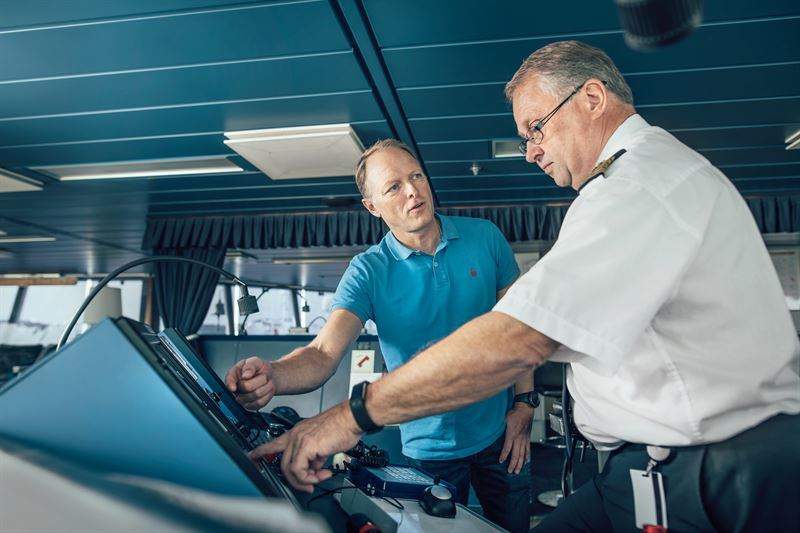
The first pilot study is being conducted on-board the Stena Scandinavica vessel plying between Gothenburg, Sweden, and Kiel, Germany, under the supervision of the vessel’s senior master Jan Sjöström.
Sjöström said: “Since we are helping the AI to evolve, we might be assisting the AI more than we are at the moment, but it is a very exciting and rewarding process.
“We’ve been making adjustments to the model after each trip for about four weeks and it is amazing to see how quickly it is learning.
“Planning a trip and handling a vessel in a safe and, at the same time, fuel-efficient way is craftsmanship. Practice makes perfect, but when assisted by AI, a new captain or officer could learn how to optimise fuel quicker. In return, this contributes to a more sustainable journey.”
US Tariffs are shifting - will you react or anticipate?
Don’t let policy changes catch you off guard. Stay proactive with real-time data and expert analysis.
By GlobalDataThe AI-based model is expected to serve as the ultimate decision support system for the captain before planning each trip.
It aims to provide precise information on various aspects such as accurate predictions of currents, as well as help share knowledge to the next generation of captains and officers.
Stena Line AI head Lars Carlsson said: “The model simulates many different scenarios before suggesting the most optimal route and performance setup.
“With the help of AI, we are able to consider a number of variables such as currents, weather conditions, shallow water and speed through water, in various combinations, which would be impossible to do manually.”
If successful, the AI-based model will enable Stena Line to achieve its sustainability goal of reducing fuel consumption by 2.5% annually.
With the pilot study, Stena Line also intends to meet its overall target of using AI in its operations by 2021.
Data from the study will be evaluated by the end of this year with an aim to support Stena Line to proceed with its plan to continue the use of AI on its 38 ships.



