
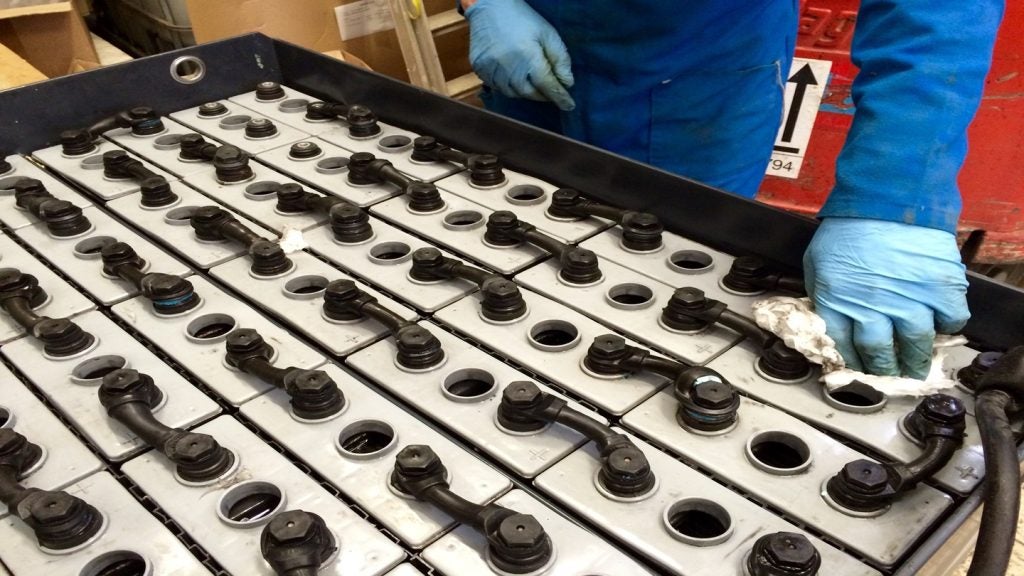
The American Bureau of Shipping (ABS) has developed an advanced simulation model to address thermal runaway in lithium-ion battery fires, a significant safety concern for the maritime industry.
This model, validated through research with Texas A&M University, accurately simulates thermal runaway at the battery cell level, according to ABS.
It will help provide crucial data on heat release and facilitate effective firefighting strategies.
As part of its commitment to enhancing safety for transporting electric vehicles by sea, ABS has introduced a specialised fire protection notation, EFP-C(EV), within its Marine Vessel Rules.
This notation outlines requirements for improved fire safety in roll-on/roll-off cargo areas carrying electric vehicles.
Additionally, ABS has published a “Best Practices for the Transport of Electric Vehicles Advisory” to offer further guidance.
The organisation is also supporting global research initiatives, including efforts at Texas A&M University’s Laboratory for Ocean Innovation, where battery fire prevention and response is a key focus among eight research priorities.
ABS Chairman and CEO Christopher Wiernicki said: “Runaway electric vehicle fires can reach temperatures of 1,200°F (650°C) or higher and present unprecedented safety challenges to the shipping industry, which connects manufactured vehicles to global markets.
“ABS is at the forefront of the industry’s response to this, which requires a blend of advanced technology, safety excellence and shipping insight.
“Developing the ability to accurately predict the behaviour of these fires is a perfect example of this and will be a foundation of the ultimate solution.”
ABS emphasises the challenges posed by lithium-ion battery fires, which can be difficult to extinguish, burn at extremely high temperatures, generate flammable and toxic gases, and may reignite even after being seemingly controlled.
Recent incidents of severe fires on ships carrying electric vehicles highlight the urgent need to address these risks effectively, stated ABS.
In June this year, ABS granted approval in principle (AIP) to Hyundai Heavy Industries and Korea Shipbuilding & Offshore Engineering for their floating small modular reactor (SMR) concept.
The concept is designed for offshore and nearshore electricity generation for port facilities and onshore communities.