
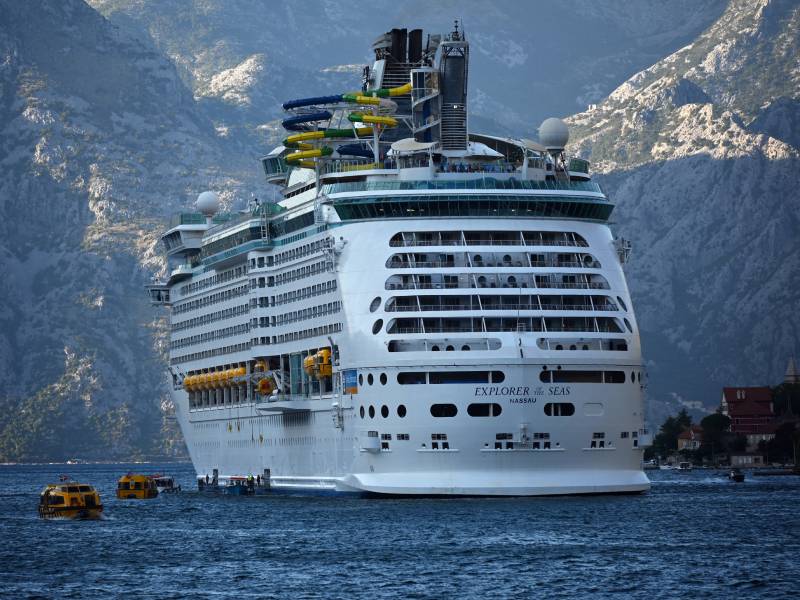
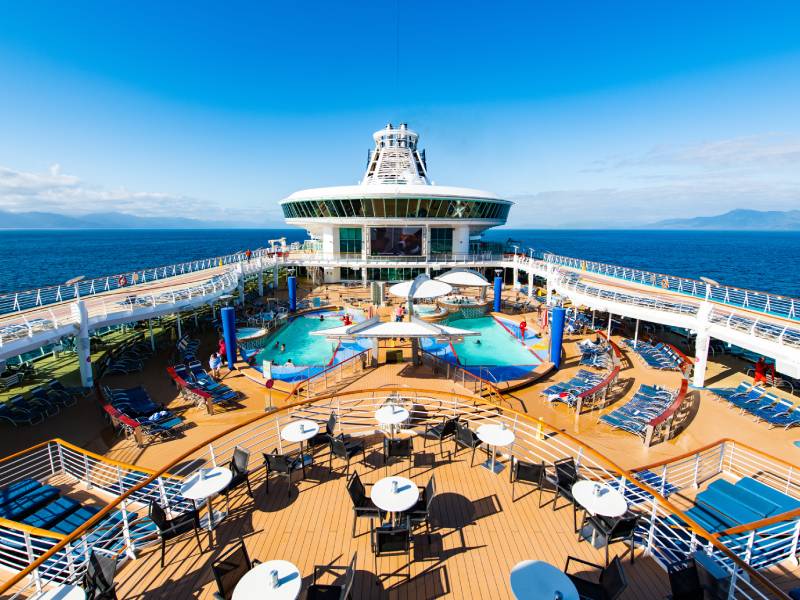
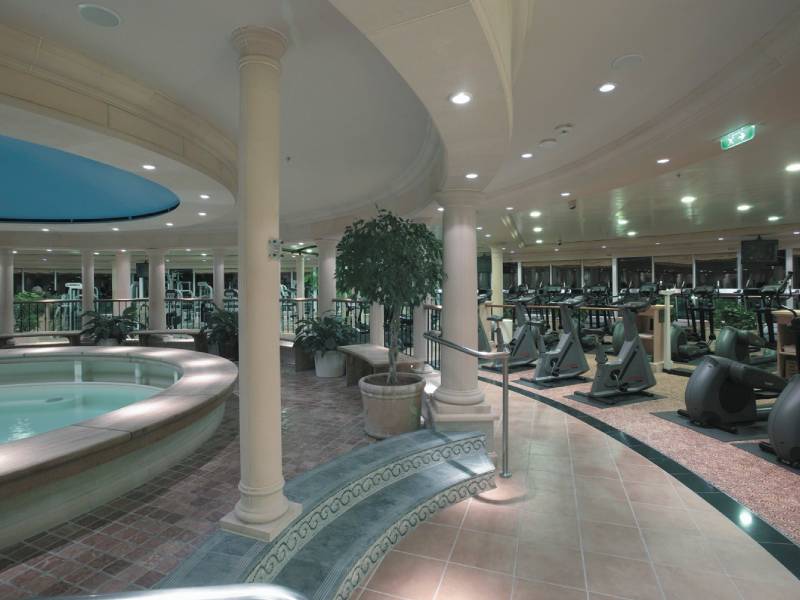
The Explorer of the Seas is a Voyager Class luxury cruise liner operated by Royal Caribbean International.
It was built by Kvaerner at the Turku New Shipyard in Finland. The ship completed its maiden voyage in October 2000.
Recommended White Papers
Recommended Buyers Guides

A $110m renovation was planned for the ship in 2020 to add new resort-style pools, adventure activities, restaurants and other attractions, but was delayed due to the Covid-19 pandemic
Explorer of the Seas design and features
The Explorer of the Seas is the second ship of the Voyager Class, which includes four other ships – Voyager of the Seas, Adventure of the Seas, Navigator of the Seas and Mariner of the Seas.
The ship has a total length of 310m (1,020ft), a maximum beam of 157ft (47m). She has a breadth of 38.6m (126ft) at waterline level (47.4m/155ft at the bridge wings) and a height from the keel to the funnel top of 72.3m (237ft). The cruise liner has a gross tonnage of 137,800gt.
The vessel has a passenger capacity of 3,286 in double occupancy and a crew capacity of 1,185. The cruising speed of the ship is 23.7 knots (kt).
The ship has a total of 15 decks, with a hospital on Deck 1, with all necessary facilities for operations, X-ray, laboratory testing etc.
It also has garbage-handling equipment, obviating the need for dumping and discharging to sea. The systems include a 1,600kW incinerator, a food waste system, a recycling and storage system for glass, metal, ash and paper, including a new automatic ash transport and packing process.
Business facilities are also located on Deck 6, with a service centre complete with PCs and internet connections. Above is the library, featuring a panoramic view overlooking the royal promenade and the online internet lounge.
The Explorer of the Seas is equipped with the latest ocean and atmospheric science laboratories. The laboratories aid the National Hurricane Center by providing meteorological data.
Accommodation facilities
The main passenger cabins are on the second and third decks. The vast majority of the outside staterooms are fitted with a veranda. The stateroom size varies from 15m² to 45m² (plus balcony). The royal suite is 107m². Of the 1,557 staterooms, 1,077 (69%) have an outside view and 757 (49%) have balconies. Every stateroom has a mini-bar and a 19in TV.
Above the library and online internet lounge is the concierge lounge and the largest guest staterooms, the wheelhouse, and the officers’ quarters.
Dining and entertainment venues
The Explorer of the Seas offers a variety of dining and entertainment options. Dining is divided into complimentary venues, included in the cruise fare, and speciality venues with additional charges.
Complimentary options include the Main Dining Room, which serves multi-course meals with a rotating international menu; Windjammer Café, a casual buffet; Café Promenade for coffee and snacks; Sorrento’s Pizza; El Loco Fresh for Mexican fare; The Dog House for hot dogs; and the Solarium Bar/Bistro for health-conscious meals.
Speciality dining includes Chops Grille, Giovanni’s Table, Izumi Hibachi & Sushi, Chef’s Table, and Johnny Rockets.
For entertainment, the cruise ship features the Palace Theater for Broadway-style productions, an ice-skating rink at Studio B, and Casino Royale.
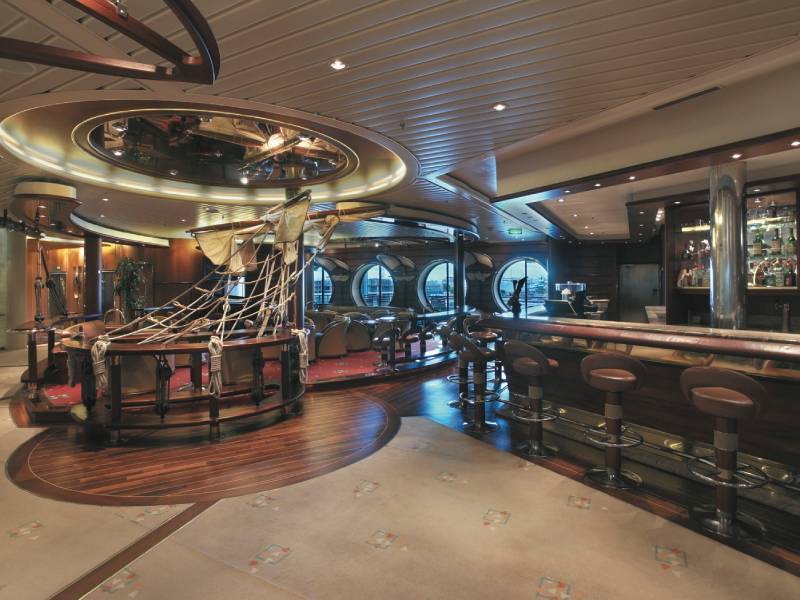
Other venues include the Schooner Bar, Viking Crown Lounge, Crown & Kettle Pub, R Bar, Star Lounge, and Boleros.
An outdoor movie screen is available by the pool, along with exclusive lounges for suite guests and high-tier Crown & Anchor Society members.
Propulsion of Explorer of the Seas
The main engines consist of six Wärtsilä 12V46C units, giving a total power of 75,600kW. These provide the power to three 14MW Azipod electric propulsion units.
The two units on the sides are fully azimuthing, whereas the one at the centreline is a fixed unit. It incorporates an electric AC motor, located inside the propeller pod, which directly drives a fixed-pitch propeller. There are also four 3MW tunnel thrusters in the bow. The total propulsion power is 42,000kW.
The dynamic positioning system ensures no anchoring is needed in sensitive coral areas.
The machinery is divided into two independent moieties for maximum availability. This layout includes a dual main machinery plant, fuel tanks, electric machinery, auxiliary systems, ventilation, piping, cabling and control and automation system.
There is a divided redundant main electric distribution and monitoring between the wheelhouse and control room, and between the two separated high-voltage switchboards. Also divided redundant are: a separate telephone, public addressing, and control and alarm systems.
Explorer of the Seas maintenance
In September 2020, Explorer of the Seas underwent extensive maintenance at Damen Shiprepair Brest (DSBr) in France.
The maintenance included a full overhaul of her four thrusters, work on stabilisers, hull and superstructure painting, renewal of seawater piping, replacement of azipod slewing bearings, and renewal of emergency and auxiliary genset exhausts.
