
Regulation B-3 Ballast Water Management for Ships Timeline for Compliance
Optimarin's timeline for compliance details Regulation B-3 ballast water management for ships in a simple to digest format.

Optimarin was founded in Norway in 1994 as one of the first companies in the world to develop a system for the environmental treatment of ballast water.

You have successfully submitted your enquiry. Someone from our company will respond ASAP
Optimarin was founded in Norway in 1994 as one of the first companies in the world to develop a system for the environmental treatment of ballast water.
Our technology is based on a solid separation (filter) for pre-treatment, and high doses of ultra violet (UV) irradiation for the inactivation of marine organisms, viruses and bacteria.
The Optimarin Ballast System (OBS) does not use or generate chemicals or biocides in its treatment or cleaning processes. It is based on the idea that such systems should be environmentally sound, simple, flexible and easy to install, as well as capable of operating on both new-builds and existing vessels.
OBS UV is based on a simple design with a powerful UV lamp. It uses a single lamp UV chamber (167m³/h) for all ballast flow rates. For higher flows, two or more UV chambers are installed in parallel on a manifold to meet the required flow. The ballast water is UV treated during both ballasting and de-ballasting, and filtered during the ballasting stage.
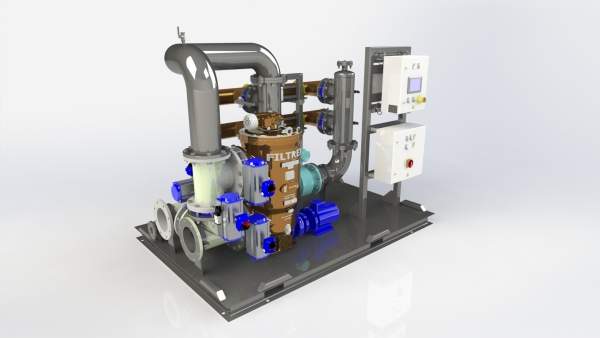
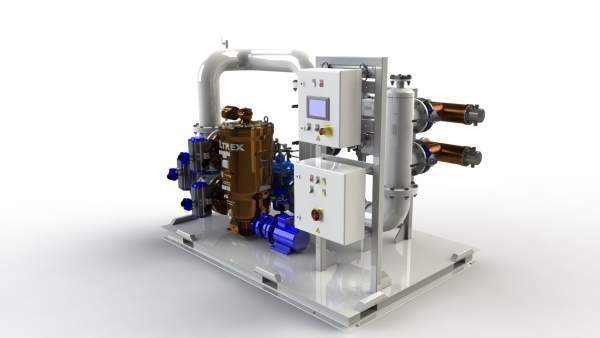
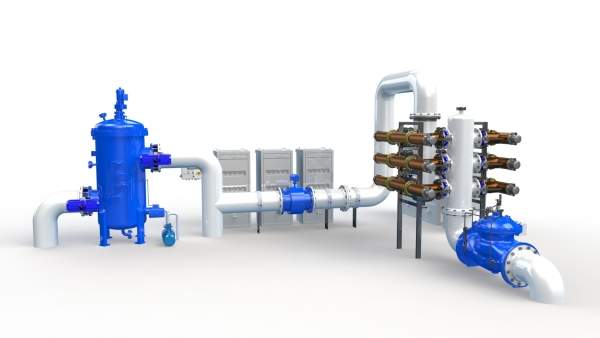
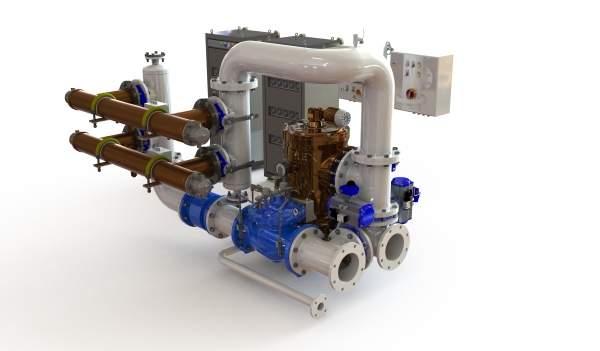
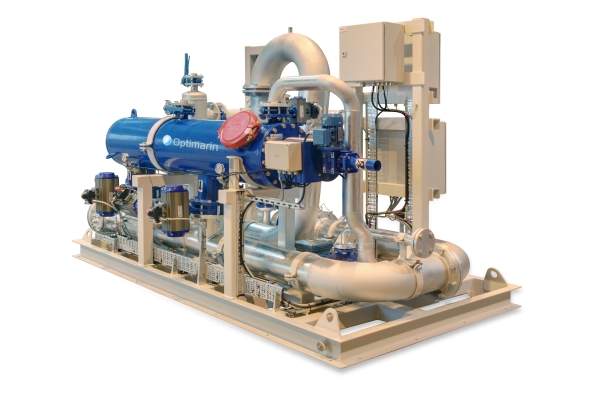
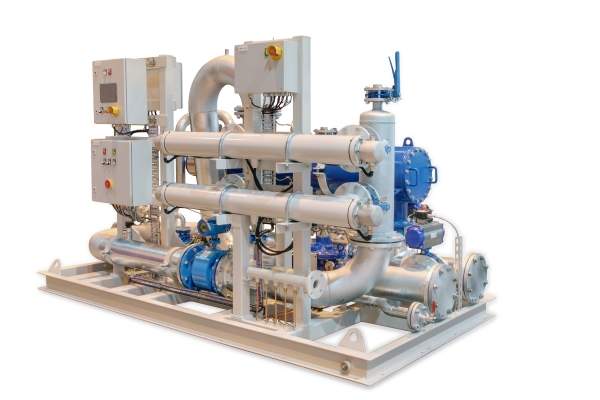
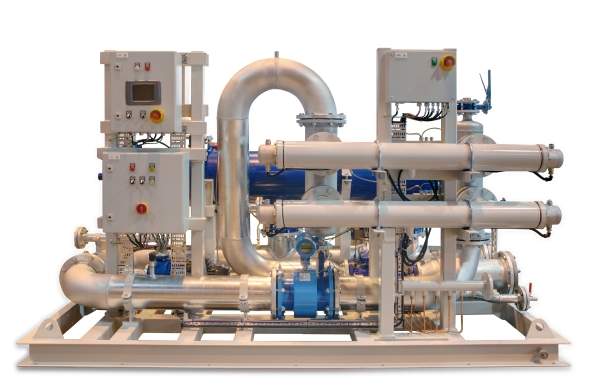
The modularised OBS is flexible for all ship types. It has a relatively small footprint and low weight, and will fit all vessel types and sizes. The OBS can be delivered as a complete skid or as a customised solution. It accommodates a wide range of ballast water capacities and can handle flows up to 3,000m³/h or higher upon request.
OBS is easy to install onboard both existing ships (retro-fit) and new-builds. Approximately 25% of the systems sold are for retro-fit applications.
OBS is usually installed in the pump or engine room, in close proximity to the ballast pumps. The equipment can be installed horizontally or vertically, on- or suspended below-deck, along the ship’s side or in several separate locations. It is relatively light in weight, adds no extra noise and has a small footprint, which means it doesn’t require much space for installation.
OBS is based on a simple and reliable design. There are few moveable parts, which minimises system maintenance and ensures operational reliability.
The patented UV chamber has a high water flow and high UV intensity, which makes the UV lamps and the inside of the UV chamber self-cleaning, resulting in a relatively long service life.
OBS is a non-active IMO type-approved ballast water treatment system. The type approval is issued by DNV-GL on behalf of the Norwegian Authority. Additionally, Optimarin has received the AMS letter from USCG, Japan’s MLIT approval and Russian Flag approval. The system is also approved by DNV-GL, Lloyds, BV ABS and CCS.
The first OBS was installed in April 2000. The current version of the OBS was IMO type-approved and installed in 2009. To date, the OBS has been sold to 300 vessels and 150 systems have been installed.
Optimarin’s original ballast water treatment technology concept was presented to the Norwegian Maritime Authority in May 1997. The technology was then tested at the Institute of Marine Research, Austevoll Aquaculture Research Station in April 1998. The results of these initial tests showed great promise and were presented at IMO in November 1998.
Consequently, the technology received vast interest from early adopters and the media, which lead to Optimarin being invited to participate in several test and demonstration projects in Vancouver during 1999 and later in the Great Lakes as part of the Great Lakes Ballast Demonstration Project.
Optimarin reached finalist positions at The Seatrade Awards 2001 and The Thor Heyerdahl International Maritime Environmental Award presented during Nor-Shipping 2001. In 2002, Optimarin was a finalist once again for the Lloyds List SMM Award in the Safety and Environment category.
Optimarin's timeline for compliance details Regulation B-3 ballast water management for ships in a simple to digest format.
Edda Fides is the first floating hotel (flotel) and service vessel in the world to be built exclusively for the offshore oil and gas industry.
Atlantis Tankers Group and its owner Armona Denizcilik AS have placed an order for ten EX-approved ballast water treatment systems from Optimarin
The Institute of Marine Research (IMR) has selected Optimarin's market proven ballast water treatment (BWT) system for its new flagship Dr Fridtjof Nansen vessel.
Ballast water treatment (BWT) specialist Optimarin has announced that it has received full EX approval for a modified version of its market proven Optimarin Ballast System (OBS).
Norway-based ballast water treatment (BWT) specialist Optimarin and German-based Zeppelin Power Systems have partnered to meet the growing demand for proven BWT technology in Germany and Eastern Europe.
Ballast water treatment (BWT) specialist Optimarin has established itself as a supplier of choice for offshore vessels, with more than 50% of its system orders now placed for platform supply vessels (PSVs), anchor handling tug supply (AHTS) and associated, advanced service vessels.
The international Ballast Water Management Convention is now one step closer to ratification following the United Nations' International Maritime Organization (IMO) meeting last week.
Optimarin has been announced as the winner of the Deloitte Technology Fast 50, showing a growth of 5,534% in the period 2008-2012.
After a long and demanding process, on 3 June Optimarin received EX approval.
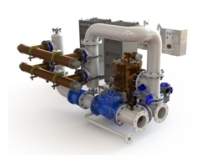
The type approved Optimarin Ballast System (OBS), is based on solid separation (filter) and works as as a pre-treatment for ballast water, providing high doses of UV irradiation for inactivation of marine organisms, viruses and bacteria, without affecting the normal operation of the ship.